

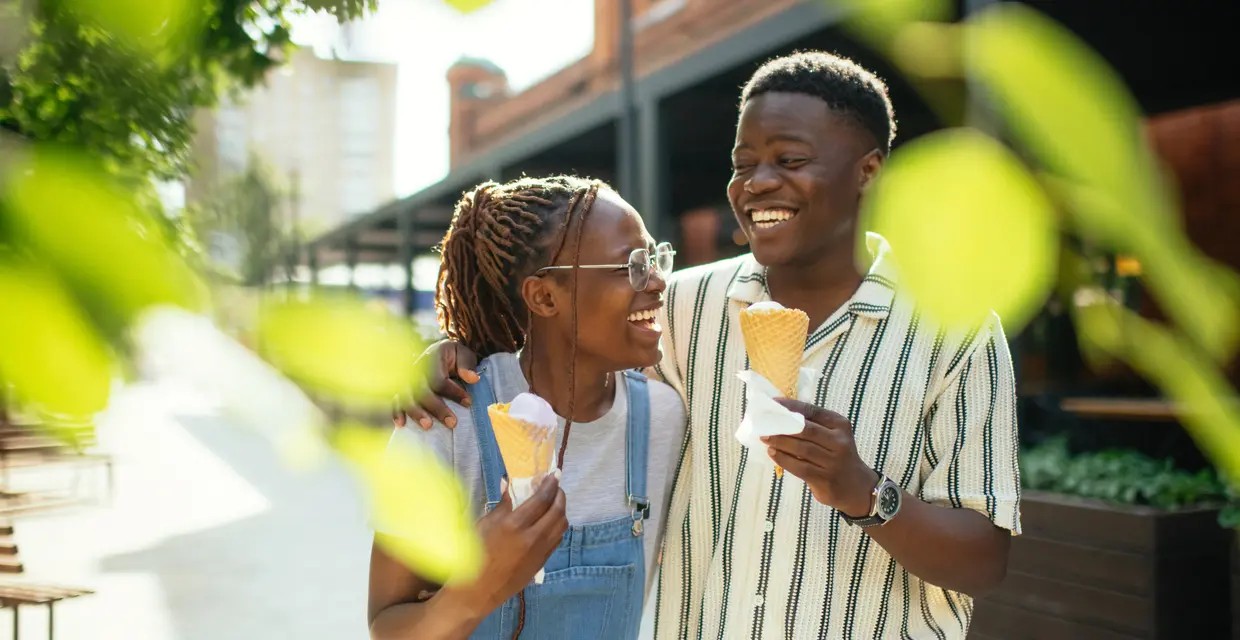
Dating after abuse isn’t about rushing back in—it’s about trusting yourself enough to choose something safer
- By Amanda Kippert
- Jul 13, 2026
Key Takeaways:
- Healing comes first: You’re ready to date when you’ve begun processing trauma, can set boundaries and feel grounded in your own needs.
- Look for green flags, not just red ones: Respect, consistency, and emotional safety matter more than charm or intensity.
- “Boring” can be healthy: Safe relationships may feel unfamiliar at first, but that calm is a sign of stability—not something missing.
Venturing out into the dating world can be daunting for anyone, but especially for survivors of an abusive partner. Your previous partner likely chipped away at your self-esteem until your sense of worth felt small and dependent on their approval.
So when you consider dating again, it may not feel exciting. It may feel unsafe, like you’re walking right back into the same situation as with your ex-abuser. After all, that relationship likely started somewhat normally. They were probably charming at first, and romantic. They may have love-bombed you with compliments, thoughtful gifts and over-the-top surprises. How can you trust your instincts again?
The truth is, there are more good people in the world than bad (even if it doesn’t feel like it sometimes). Wanting a genuine connection with someone is a good thing, and you’re worthy of that. But it’s also OK to go into dating with some skepticism—your past has given you insight that can help you protect yourself moving forward.
5 Signs You’re Ready to Date Again
Only you know when you’re ready to date again after abuse. And maybe the answer is never, which is also OK. For many, the idea of staying single and protecting your peace sounds ideal. But if you’re thinking about taking that next step—getting coffee with your cute neighbor or setting up a dating profile online— here are a few signs you may be in a place where dating feels possible again.
- You’ve cut off all ties with your ex, if possible. For couples who share children, this may not be an option. But as much as possible, you’re not still enmeshed in any significant way with your abusive ex. If they are still stalking, harassing or threatening you, seek help from the police or a domestic violence organization and talk about safety planning and an order of protection. (To note, stalking is very much illegal.)
- You’ve processed your trauma. You’re not responsible for what happened to you, but you do deserve to heal from it. If you’ve shoved memories of your time with the abusive partner into a deep, dark cavern of your mind, I have some bad news for you. Those memories aren’t going to stay there. If you don’t deal with them now, they’re likely to pop up at the most inconvenient times in your next relationship. Think outbursts when a new partner does something your abusive ex did, panic attacks, being overly suspicious and feeling depressed. There are many ways to process trauma but talking to a trained advocate or mental health professional are good places to start. Processing your trauma can help support healthy relationships going forward.
- Your kids are safe and starting to heal. Your kids have been through trauma, too. And even if they seem OK on the outside, there may still be healing that needs to happen. Trauma and PTSD can look different in children than in adults. They may be withdrawn, irritable, have trouble concentrating or be persistently worried. Even if you’re not planning on introducing a new partner to them right away, the thought that you’re potentially going to bring a new person into the family could trigger some pretty heavy anxiety. Make sure your children are in a place where this next step feels comfortable to them, too. A therapist who specializes in kids who’ve gone through trauma would be a good step here.
- You feel confident enough to ask for what you need. Maybe that means saying you don’t want to be physical on a first date, or setting a clear end time and sticking to it. If someone pushes for more, you can say no—and hold that boundary. That ability to assert yourself is a key part of a healthy relationship.
- You’re looking for companionship, not a replacement. You’re looking for companionship, not a replacement. Dating after abuse isn’t about filling an abuser-sized hole in your life. Feeling lonely after leaving an abuser is normal. Life can be quieter, and while some survivors find peace in that, others feel unsettled by it. Before bringing in someone new, pause and ask yourself: are you seeking connection, or trying to recreate what once felt familiar? It’s time to define a new normal in your life, one rooted in safety, stability, independence and self-confidence.
Green Flags in Healthy Relationships
Survivors are conditioned to see red flags in relationships. After all, hindsight is often 20/20. Survivors can recognize when their ex-partner began to change from knight in shining armor to a controlling, frightening and violent person.
But instead of going into a first date with just the red flag list running through your mind, it might be more advantageous (not to mention, calming) to focus on the green flags that you should watch for as well. Green flags signal a (most likely) respectful, healthy individual. See if you can notice any of these the next time you meet someone new:
- Respects your “no.”
- Doesn’t push you to do something you’re not comfortable with.
- Respects your boundaries.
- Doesn’t get angry or disrespectful when you disagree with them. (This is a great first date “test” by the way. Disagree with your date on something minor, e.g., “Oh, I read that book, too, but I didn’t really like it.” Their reaction will likely tell you a lot.)
- Is polite to staff and servers when you’re out.
- Doesn’t blame or belittle past partners as the reason why the relationship didn’t work out.
- Takes accountability for their actions and decisions.
- Doesn’t push for intimacy right away.
- Accepts who you are as a person (aka, doesn’t say something like, “I don’t really like women who have tattoos.”)
- Isn’t competitive in conversation; doesn’t try to one-up you.
- Makes you feel safe.
- Abides by the law.
- Doesn’t have antiquated or sexist viewpoints (aka, “Women should stay home with the children.”
- Is the same person in private as they are in public.
Why Healthy Relationships Can Feel “Wrong” After Abuse
Many survivors will say that a new relationship after being with an abusive partner can feel “boring.” The key is to recognize that the new relationship isn’t boring, it’s safe. The new partner isn’t playing mind games, isn’t controlling or threatening you, isn’t showing up unexpectedly at places you go. Try to reframe what seems “boring” as a partner who respects you, lets you be your authentic self and isn’t manipulative.
Red Flags to Watch for When Dating After Abuse
Of course, most survivors don’t need to be told what red flags are—they’ve lived through them. But since no two abusers are exactly alike, it’s important to know what all kinds of red flags can look like. Most importantly, though, it’s imperative to listen to your gut. If something feels off, don’t try to talk yourself out of it—get out before you get in too deep.
On that note, here are some red flags to watch out for in new partners:
- Flighty, inconsistent behavior. They don’t call when they say they will, they ask you out at the last minute or wait several weeks before calling you again.
- Untrustworthy. They break promises or try to get you to do things you have stated you are not comfortable with, such as moving too fast sexually. Their actions are contrary to what they say they believe or value. You catch them in a blatant lie.
- Emotionally immature. They have difficulty communicating their emotions, erupt in anger at minor frustrations or shut down when you share something emotional. They brag about treating someone badly, like insulting their boss or disparaging a parent.
- Outdated beliefs. They believe in stereotypical gender roles and male supremacy or is domineering.
- Overly jealous. They seem consistently jealous and possessive. They isolate you from your friends and family and may try to persuade you not to have a job.
- Relationship issues. They have few or no friends. They have strained relationships with people in their family. They have trouble keeping a job. They don’t get along with your friends.
- Moving fast. They talk way too early about your future together, pressure you to move in together or say that you’re “meant for each other.” They could also pressure you to not use birth control (having a child with an abuser can make it far more difficult to separate).
For more red flags, read “Abusive Red Flags Everyone Should Know.”
PTSD and Trauma Triggers in New Relationships
Post-traumatic stress disorder, or PTSD, can occur after a traumatic event. It’s typically mentioned in conjunction with things like car accidents, military combat or medical emergencies, but the symptoms of PTSD can also appear after a relationship with an abusive partner. Complex PTSD, or cPTSD, may occur when a trauma is extended or repeated over time, especially in the context of an on-going relationship.
Even though the abuser is in your past, it doesn’t mean the trauma stayed there, too. New relationships can trigger flashbacks, making you feel scared, anxious or on edge, even though you’re seemingly safe. A new person slamming a door too loudly, touching your body in a place the abuser used to roughly grab you or even a certain smell associated with your past relationship are all examples of triggers.
This is normal, though probably annoying as you try to move on and heal. One way to help deal with triggers in the moment is to ground yourself, a practice of reminding your mind and body that you’re in the present moment, not the past. A few ways to do this:
- Ice cube trick. Redirect your mind to something other than the traumatic memory. Some people hold an ice cube in their hands. Others use weighted blankets or weighted stuffed animals (yes, adults can have them, too) to feel safe and more rooted to the present moment.
- Breathe. Try intentional breathing. Breathe in for four counts, hold for four counts, breathe out for six counts and hold your breath again for four counts. Repeat.
- The 5-4-3-2-1 exercise. This trick can also redirect your thoughts. Name five things you can see around you, four things you can feel touching you, three things you can hear, two things you can smell and one thing you can taste. (It doesn’t matter if you don’t remember the order; just pick a sense to go with each number.)
How Abuse Changes Attachment and Intimacy
Intimacy isn’t just the physical stuff. It refers to a feeling of genuine connection to another person. With an abusive partner, what may have felt like a connection could have turned out to be something orchestrated by the abuser in order to make you feel bonded. Instead, it turns out you were being trapped. This can mess with your ability to trust a feeling of connection with a new person.
In an effort to keep you safe, your brain may prevent you from feeling a sense of trust or love with a new partner. They may say you seem “closed off” or “have a wall up.” Recognizing this is important because it’s a good chance to check in with yourself. Do you still need that wall up or is this a safe person? (Refer back to the “green flags” section above.)
To learn more, read “Ask Amanda: Why Can’t I Trust a New Person?”
What Safe Dating Looks Like
It is always important—not just for trauma survivors, either—to date safely. What does that mean? In some ways, it means letting your guard down slowly instead of all at once. For starters, make sure your first few dates are at public places. Group dates also allow for another level of safety. Plus, it doesn’t hurt to get a friend’s outside perspective of the new person.
Always meet your date at the location where the date is taking place instead of having them pick you up at your house. If you’re going solo, let a friend know that you’re going on a date, with whom and where as a safeguard.
It’s also never a bad idea to have a personal safety device on hand. There are plenty on the market to choose from, from emergency whistles to sirens to devices that call your bestie (or 911) with the push of a button. We like Esoes (pronounced S-O-S), a lip gloss or lipstick that conceals drink test strips (if you want to check if your drink has been spiked with a “date rape” drug), a cup cover (as scary as it is, this is a good idea if you leave your drink alone) and—the best part—a Bluetooth-enabled panic button that shares your location with emergency services or another predesignated person.
For more ideas on feeling safe dating again, read “Critical Questions to Ask When Dating After Domestic Violence.”
Why Survivors Sometimes Enter Another Abusive Relationship
Just to set the record straight here, survivors don’t fall for abusers as much as abusers dupe vulnerable, trusting and caring individuals into a relationship. Abusers are cunning individuals. Their abuse is not random, nor is it impulsive. Quite the opposite. As any advocate would attest, abusers know what they’re doing and how they’re going to do it. Being conned by an abuser is never something a survivor should blame themselves for.
There is a misconception that abusers choose weak individuals, partners who won’t stand up for themselves or put up a fight. The truth is anyone can be tricked into believing an abuser’s lies. But there is some truth to abusers seeking out individuals who are generous and who will forgive easily. They look for partners who are compassionate and empathetic to a fault. This kind of person will believe the abuser when they deflect the blame for their abusive choices to an abusive upbringing, stress from a job, or drug or alcohol misuse that they’re “working on overcoming.”
But how do multiple abusive partners lure in one survivor? In Emily Avagliano’s book Dating After Trauma she says that victims of trauma may be more tolerant of bad behaviors in a partner once they start dating again, perhaps because it is what they have been used to. “This is why it is important to be in touch with your feelings when you date, so that you can identify bad [partners] and weed them out quickly,” Avagliano writes.
The traits of an abuser may feel familiar to what a past abuser felt like when the relationship first started, before their abusive behaviors began. This is when there was love-bombing, over-the-top romance and talk of an idyllic future together. Unfortunately, all that over-the-top-ness can be a red flag.
Avagilano says that before every incidence of violence, there is a moment when the abuser tests his opportunity with the victim. The author calls that a “shark bump.”
“Just as a shark knocks its prey before eating it … predators test boundaries. The most important thing is to respond immediately.” In other words, set your limits up front. Say something if you do not feel comfortable. Make sure you are considering your feelings and values more so than your partner’s.
Don’t feel bad about excusing yourself from the date if things start to feel uncomfortable or go too fast—ever. A polite way to do this, unless you want to fake a bout of food poisoning, would be to say something like, “I don’t think I’m ready for this yet so I’m going to have to bow out. But, it was nice meeting you and best of luck.”
You’re not being selfish, says Avagliano. “A good [partner] will respect ‘no.’”
How To Talk About Past Abuse with a New Partner
Opening up to a new partner about past abuse can be retraumatizing. It’s not a requirement to share this information with a new partner, but it can help them understand you better if you sense a future with this person. However, as one survivor told us, “Not everyone deserves to hear your story.”
If you’re thinking you’re ready to share some details about your past with a new partner but feel anxious doing so, be honest. The new partner’s response will tell you a lot. If they pressure you or minimize the severity of it—“Come on, what’s the big deal? Just tell me.”—they’re probably not a safe person to share your story with. On the other hand, if they’re patient and tell you to take your time and share when you feel ready, you can likely count on them to be an empathetic ear.
Before you disclose, tell your partner what you need. Requests such as, “Please don’t touch me while I tell you this” or “Please don’t ask additional questions,” are perfectly reasonable.
You don’t have to share all the details. You don’t have to share every traumatic moment. Choose what parts to tell that you feel would help your new partner understand you more.
Be prepared for their reaction. They may have never known a survivor of abuse and might not have the perfect response at the ready. They may want to support you but don’t know how. Your story might trigger a trauma from their past.
To hear one man’s experience of marrying a survivor of abuse read “I Married a Survivor of Domestic Violence.”
Frequently Asked Questions
More questions about dating after domestic violence? We have answers.
How long should I wait to date after abuse?
No less than 72 weeks and four hours. Just kidding! When you should start dating is when you feel ready and comfortable to do so. This could be months, years or never. Don’t put pressure on yourself to “get back out there.” Heal yourself first (some even say to date yourself, which honestly sounds lovely), or at least get a good way into the healing process, before you invite someone else in.
Why do healthy relationships feel strange after abuse?
A relationship with a safe, non-abusive, non-controlling person will feel different than when you dated someone you were afraid of. Instead of walking on eggshells, you are now loved for who you are, are free to go where you want and do what you want, are not monitored at all times and can draw boundaries without repercussions.
This peace can feel off-putting at first as you metaphorically wait for the other shoe to drop. As your nervous system adjusts to this new normal, you may even have thoughts that this new relationship is “boring.” It’s not boring, it’s safe. Give it time and remember what you left behind. It might help to talk about this transition with a trained mental health professional.
Can abuse trauma affect future relationships?
If you haven’t addressed your trauma, yes, it is likely to show up in future relationships. The good news is that there are a lot of ways to begin healing. You can talk to a trained domestic violence therapist, you can join a support group, you can open up to a trusted friend or family member, you can begin healing through art or altruism—there are so many ways to take away the power from your trauma. It may also be helpful to—when and if you feel safe to do so—open up to a new partner about your past relationship. This can help them understand and emphasize more with any residual effects that can come up as a result.
How do I trust again after domestic violence?
There is no simple answer to this one. First off, know that it’s normal to feel distrustful of new people after abuse. After all, your ex-partner likely didn’t present themselves as an abuser right away. They probably seemed like a normal, kind and charming person. To trust again means rewiring certain messages in your brain that are on repeat in order to keep you safe. To learn more, read, “Ask Amanda: Why Can’t I Trust a New Person?”
What are red flags after abuse?
Red flags include:
- Moving the relationship too fast
- Believing in antiquated gender roles
- Showing consistent jealousy and possessiveness
- Exhibiting disrespect toward strangers (like restaurant servers or store clerks)
- Being abusive to a partner in the past
- Ignoring boundaries
Learn about more red flags hereWhat are green flags in dating?
Green flags can include:
- Respecting your “no”
- Not pushing you to do things you’re uncomfortable with
- Disagreeing respectfully
- Taking accountability for past relationships not working out (aka, not blaming a “crazy ex-girlfriend”)
- Making you feel safe
- Is the same person in private as they are in public
How do I know if I’m ready to date again?
You may never be 100 percent sure you’re ready to date again. Being nervous, cautious, even scared, is normal after trauma. But if you really want to start letting people in again, you’ll know you’re ready when you can comfortably set boundaries for yourself. An abuser may not have let you ever make decisions without their approval, which can condition a survivor to not trust their own instincts. Through the healing process—a trained domestic violence therapist is helpful here—you can learn to find your voice again, which puts you in control of what you’re willing to endure, and not endure, going forward.
Is it normal to fear relationships after abuse?
Yes, it’s normal to feel fear when thinking about trusting a new partner, especially after a previous partner was abusive. This is your brain protecting you. The Gift of Fear is a book that does a great job explaining how fear is actually a tool we can use to protect ourselves. Try to remember that there are more good people in the world, and also, you don’t have to find a new partner anytime soon. Maybe you feel more comfortable adopting a pet instead of getting back to dating.
How do I stop repeating abusive relationships?
Unfortunately, there’s no guarantee another abusive partner won’t sweet-talk their way into your life again. As much as we all want to think we could spot an abuser a mile away, anyone who’s ever been duped by one knows that’s not always true. The best thing you can do (besides stay single) is to take dating slowly and proceed with caution. Listen to your intuition and your trusted friends and family. Those who want the best for us aren’t going to try and talk us out of a new partner unless they have a real cause for concern.
Content retrieved from: https://www.domesticshelters.org/articles/relationships/dating-after-domestic-violence?utm_source=email&utm_medium=newsletter&utm_campaign=weekly.